





7
If you’ve ever driven a Jeep Wrangler or Jeep Gladiator, chances are you’ve experienced it—the subtle lift of a hand, two fingers off the wheel, or a full wave from another Jeep driver coming your way.
That’s the Jeep Wave.
What Is the Jeep Wave?
The Jeep Wave is an unspoken tradition among Jeep owners. It’s a simple gesture, but it represents something bigger—a shared understanding that you’re part of a unique community. Whether you’re on pavement, dirt, or somewhere in between, that wave connects drivers who chose capability, adventure, and freedom.
Where It Came From
The tradition traces back to military roots, when early Jeep vehicles were used during wartime. Soldiers would acknowledge each other as they passed, and that sense of camaraderie carried over into civilian life. Today, it’s still alive and well—especially in places like Vermont, where Jeep ownership isn’t just about style, it’s about practicality.
Why It Matters Here in the Northeast Kingdom
Around St. Johnsbury and throughout the Northeast Kingdom, Jeeps aren’t just weekend toys—they’re daily drivers built for everything Vermont throws at you:
- Mud season backroads
- Snow-covered highways
- Trail rides and mountain views
- Weekend getaways off the beaten path
When you pass another Jeep out on a Class IV road or cruising down Memorial Drive, that wave feels earned.
It’s More Than a Vehicle
Driving a Jeep means joining a community. It’s about helping each other out on the trail, sharing stories, and appreciating the capability that comes with the badge. The Jeep Wave is a reminder that no matter where you’re headed, you’re never really driving alone.
Keep the Tradition Alive
Next time you’re behind the wheel of your Jeep and see another one coming your way—give the wave. It’s a small gesture that keeps a long-standing tradition going strong.
At St. Johnsbury Chrysler Dodge Jeep Ram, we’re proud to be part of the Jeep community right here in Vermont.
St. Johnsbury CDJR — Where Vermont comes to drive.
FEMA Approves Funding for Vermont Flood Recovery – What It Means for the Northeast Kingdom
Recent news out of Vermont brings a positive step forward in the ongoing recovery from the flooding that has impacted communities across the state.
The Federal Emergency Management Agency (FEMA) has approved funding to support flood recovery projects in Vermont—part of a broader effort to help communities rebuild, strengthen infrastructure, and better prepare for future storms.
🌧️ Why This Matters to Vermont


6
If you live in the Northeast Kingdom, you’ve seen firsthand what the past few years have brought.
From washed-out roads to damaged homes and infrastructure, flooding has become more frequent—and more severe. In fact, multiple storms in recent years have caused widespread damage across towns like Burke, Lyndon, and surrounding areas.
This funding represents more than just dollars—it’s part of a long-term effort to help small communities recover and become more resilient moving forward.
🏗️ What the Funding Supports
FEMA funding is typically used for:
- Repairing roads, bridges, and public infrastructure
- Supporting local municipalities with recovery costs
- Strengthening flood mitigation efforts to reduce future damage
Programs like these are designed not just to fix what was broken—but to help prevent the same level of damage the next time severe weather hits.
🌲 The Reality for the NEK
While this funding is a step in the right direction, many towns in the Northeast Kingdom have faced challenges securing enough support after recent flooding events.
Some communities have had to explore alternative funding or local solutions when federal aid wasn’t fully available—highlighting just how important investments like this can be when they do come through.
🚙 Why It Hits Close to Home
Here in St. Johnsbury and across Caledonia County, reliable infrastructure—and reliable vehicles—aren’t optional.
When roads wash out or conditions change quickly, it impacts:
- Daily commutes
- Local businesses
- Emergency response
- And the overall flow of life in our communities
That’s why resilience—both in our infrastructure and in what we drive—matters so much in Vermont.
Looking Ahead
This funding is another step forward in helping Vermont communities recover, rebuild, and prepare for whatever comes next.
For those of us in the Northeast Kingdom, it’s a reminder of how strong and resilient this region is—and how important it is to keep moving forward. Fema Flood Recovery
Right Here in St. Johnsbury
At St. Johnsbury Chrysler Dodge Jeep Ram, we see the impact of Vermont weather every day—from mud season to flooding and everything in between.
If your vehicle has taken a hit over the past year, or you’re thinking about upgrading to something better suited for Vermont conditions, stop by and see us on Memorial Drive—just past the railroad tracks.
“Where Vermont comes to drive.”
1. PoemTown St. Johnsbury (All Week)


6
📍 St. Johnsbury
🗓️ All of April
- Hundreds of poems displayed in downtown storefronts
- Community-driven for National Poetry Month
- Easy walkable activity
👉 This is one of your best “this week” posts—low effort, highly local, and unique to the area.
2. Local Live Performances & Shows (Ongoing This Week)


7
📍 Catamount Arts area
🗓️ Multiple events throughout the week
- Rotating concerts, films, and performances
- Small venue, strong community turnout
👉 Blog angle: “Something to do this week in the NEK (besides sitting at home)”
These performances run consistently throughout spring in the region.
3. NEK Classical Music Series (Spring Performances)


6
📍 Around St. Johnsbury and NEK
🗓️ Spring concert season (active now)
- Chamber music performances
- Draws regional audiences
👉 Blog angle:
“Not something you expect in a small town—but it’s happening here”
This series runs through the spring with scheduled performances.
4. NEK Council on Aging Classes & Community Programs
📍 Northeast Kingdom Council on Aging
🗓️ This week (example: April 20 wellness programming)
- Exercise classes, wellness programs, community events
- Regular weekday programming
👉 Blog angle:
“What’s happening around town during the week (not just weekends)”
Example: scheduled programming like exercise classes is actively running this week.
5. Spring Farmers Market (Indoor – Final Weeks)


7
📍 St. Johnsbury Farmers Market
🗓️ April (indoor season wrapping up)
- Local food, crafts, baked goods
- Transition to outdoor market coming soon
👉 Blog angle:
“Last chance to hit the indoor market before summer kicks off”
Indoor markets continue through April before shifting outdoors in May.
St Johnsbury Chrysler Dodge Jeep Ram’s Blog-Spring in the Northeast Kingdom: 5 Scenic Drives Worth Taking Right Now

Spring in the Northeast Kingdom is one of the most underrated times to explore Vermont. The snow is melting, the roads are opening up, and the landscape starts to come alive again. Whether you’re behind the wheel of a rugged Jeep or cruising in a comfortable Ram, this is the perfect time to get out and enjoy the drive.
Here are five must-drive routes right here around St. Johnsbury:
1. Route 5 Along the Connecticut River
A smooth, easy drive with great river views. Perfect if you’re just looking to unwind after work or take a relaxed weekend cruise.
2. Lake Willoughby Pass (Route 5A)
Arguably one of the most scenic spots in all of Vermont. Driving between Mount Pisgah and Hor is something everyone should experience at least once—especially as the ice starts to break up on the lake.
3. Burke Mountain Road
If you’re looking to test your vehicle a bit, this is a great climb with rewarding views at the top. A great reminder why Vermont drivers love capability.
4. Route 114 Toward Island Pond
A longer, peaceful drive with classic Northeast Kingdom scenery—forests, small towns, and plenty of spots to pull over and take it all in.
5. Backroads Around St. Johnsbury
Let’s be honest—this time of year is what Jeeps and trucks were built for. The dirt roads might be messy, but that’s part of the fun.
Why It Matters
Living in Vermont means your vehicle isn’t just transportation—it’s part of your lifestyle. Spring driving conditions can change fast, from dry pavement to mud and everything in between. Having the right vehicle makes all the difference.
At St. Johnsbury CDJR, we see it every day—customers who rely on their vehicles not just to get from point A to B, but to actually enjoy where they live.

April 10, 1907 was a somber day for Dr. George Lucian Gates of Morrisville. His close friend, Dr. William Walter Genge, had died early that morning. Forty-four-year-old Genge had been a skilled surgeon, head of the Morrisville Orchestra, and had only been ill with the effects of pneumonia for a few days before he took a shocking turn for the worse. Dr. Gates had been at his deathbed.
Heading back home that morning, Gates boarded the train to Hardwick, along with 33 other passengers and crew members. The train was also carrying mail and was due to arrive at its destination at 7:25 a.m. Fifty-four-year-old engineer Frank Miner had taken his place in the locomotive along with the line’s fireman, a 53-year-old Swede named Charles Johnson.
Seventeen individuals boarded the passenger car, including 21-year-old Harvey Antoin Gravlin and his wife, the former Julia Essie Emerson. Mr. Gravlin, who worked as a moulder at E. & T. Fairbanks & Co., had exchanged vows with his bride only seven months earlier.
Thirty-seven-year-old Albert John Gale, who was employed as a finisher at the Jones & Shield Furniture Shop, also took a seat on the passenger car with his wife of four years, the 33-year-old former Emily Corey. Forty-one-year-old Swedish piano salesman Edward Peterson and 41-year-old machine shop employee Justin Lord also climbed on to the passenger car in addition to the train’s conductor, Charles Ranney.
The combination car carried 15 individuals, with six of them seated in the smoking compartment. These included Fred Carter of St. Johnsbury, J.F. Johnson of Boston and William Silas Bailey of East Hardwick – who was traveling with his 16-year-old son Ralph Wilson Bailey, a student at Hardwick Academy. William was well-known as a high-end horse breeder and race judge. The 50-year-old had once managed his own stock farm and served as president of the Vermont Horse Breeders Association. When not in school, his son Ralph worked as a packer in Fairbanks’ scale shop. The crew members sharing the car with them included 26-year-old express agent George Alex Campbell, 46-year-old mail clerk Prentice Wright Carlton, and baggage master Orlando Cogswell.
About two miles east of Hardwick, as the train nearly completed the sharp curve at Cape Horn, the rails suddenly spread and the coupling pin between two cars broke. Fireman Johnson felt a strong jolt and turned to see the derailed passenger car rolling down the 25-foot embankment toward the Lamoille River. Halfway down, it turned completely over and then righted itself at the river’s edge 30 feet from the track.
The combination car plowed forward behind it, dragging the tender with the train’s fuel supply down the embankment. As it proceeded down the slope, it temporarily stumbled onto its side before coming to a stop, right side up. The father of William Montague, a section hand who was aboard the train, was across the river with his team of horses and stood helplessly watching the nightmare unfold.
In the smoking compartment, Fred Carter had been having a discussion with William Bailey just before the accident. The two men were sitting directly across from each other during the journey, and when the window shattered, the broken glass flew against Carter, causing a deep wound in his scalp that bled profusely. J.F. Johnson had been violently thrown over Bailey when the car began to tip. He escaped, however, with nothing more than slight bruises and cuts, as did Ralph Bailey. As the car tipped, William Bailey was thrown against the lamps, which shattered on impact. Aside from the massive bleeding that occurred from the lacerations on his body, he suffered a concussion and a dislocation of the vertebrae in his spine. The damage to the spine quickly proved fatal. He left his wife, Flora, and three children to mourn the tragic loss and became the railroad’s first fatality.
Those who were lucky enough to sustain very minor injuries included Victor Young and James Day, 38-year-old granite cutter Henry Rollins, 31-year-old granite loader Bert Russell, and 48-year-old traveling leather goods merchant Henry Prentice Ayer of Boston. A small number, even luckier, walked away completely unhurt, including Mr. H.H. Woodward.
In 1973, the state of Vermont bought the railroad and renamed it the Lamoille Valley Railroad. The industry puttered along until 1995 when, at last, it ceased operation after 118 years of service. In 2006, plans were laid for a multi-use, four-season trail to be established over the old railway route. In 2022, the 93-mile long Lamoille Valley Rail Trail was completed – the longest rail trail in all of New England.
The trail connects 18 towns, offering snowshoeing, cross-country skiing, dogsledding and snowmobiling in the winter; walking, hiking, cycling and horseback riding in the milder months. The trail contains a memorial plaque for three men killed on the railroad during a 1949 accident – 42 years after William Bailey lost his life on the line.
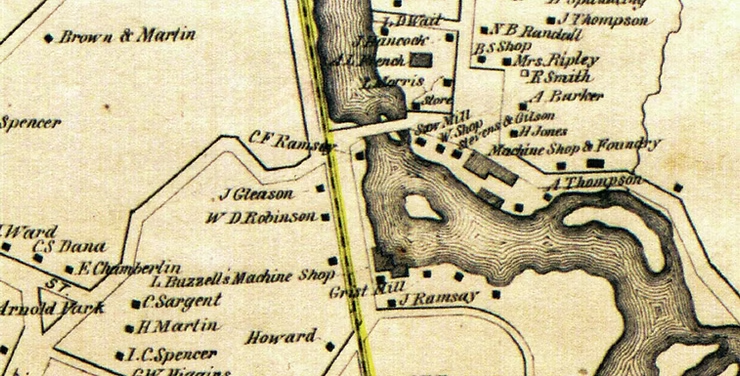
A conversation with a gathering of friends recently, included discussion about the original location of Railroad Street. Unknown to some of the group was that today’s Mill Street was a portion of yesteryear’s Railroad Street.
“The triumphant arrival, in November of 1850, of the first train from Boston over the newly-completed Connecticut & Passumpsic Rivers Railroad was a most important step in the growth of E. & T. Fairbanks Co.” (CDJ=Clair Dunne Johnson’s book, the first volume, I See By The Paper). Prior to the advent of the railroads entry into St. Johnsbury the commercial district of the village was on Main Street. Edward T. Fairbanks informs us in his 1912 history of St. Johnsbury, “The first dwelling house on Railroad street was built March 1850, by Amos Morrill. At that date there had been neither road nor building east of Main street except the little farm house lower down where the first pitch had been made in Nov. 1786.”
The H.F. Walling map of 1858 depicts the southerly terminus of Railroad Street at about 1,000 feet southerly of Eastern Avenue. In fact, at that period in history, Pearl Street ran much further south than Railroad Street. Then it traversed northerly to the point, where today, a traveler would turn right onto Mill Street, then turn left at Concord Avenue to continue northerly onto our current Railroad Street.
“Getting the railroad as far north as St. Johnsbury was only a first step in fulfilling the transportation needs of E. & T. Fairbanks Co. The push went on, to get the line completed all the way to Montreal, to the north, and with that feat accomplished, St. Johnsbury eventually became the half-way point between Montreal and Boston, a point which was often mentioned in publicity.” (CDJ) The C. & P.R. RR.’s Sheet No. 62 of Valuation Section No. 43 informs us that various portions of property, in the area of Mill Street, were conveyed from 1856 to 1858 to allow extension of the railroad to Montreal.
https://www.stjhistory.org/post/st-johnsbury-history-heritage-center-railroad-street
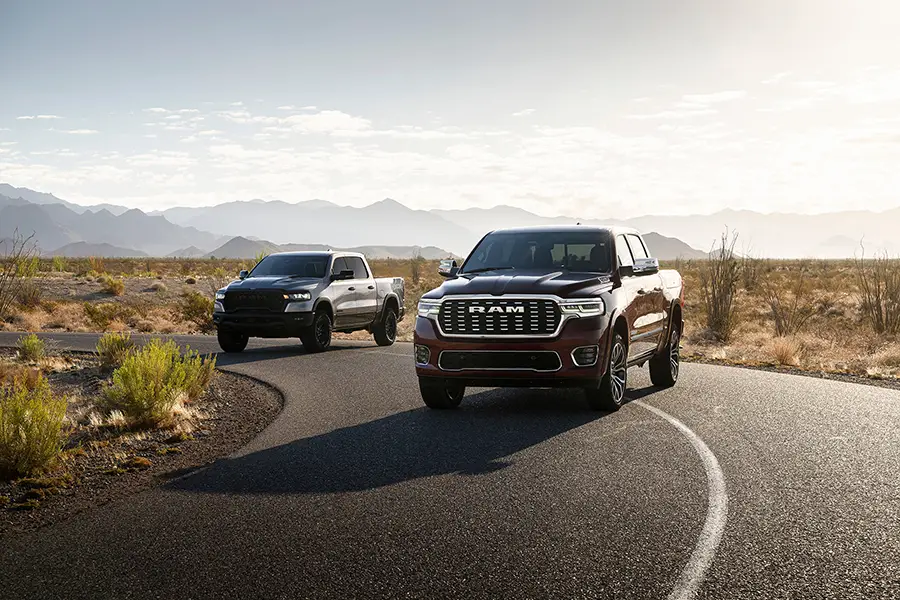
When you’re investing in a truck, you’re not just buying horsepower—you’re buying confidence. And right now, Ram is setting a new standard for peace of mind with one of the strongest warranties in the industry.
What’s the Big Deal?
Ram now offers a 10-year / 100,000-mile limited powertrain warranty on select new trucks. That’s not just competitive—it’s category-leading.
This coverage typically includes:
- Engine
- Transmission
- Drivetrain components
In other words, the most expensive and critical parts of your truck are protected for the long haul.
👉 Learn more about Ram’s warranty coverage here:
https://www.ramtrucks.com/owners/warranty.html
Why This Matters for Vermont Drivers
Here in the Northeast Kingdom, your truck isn’t just for commuting—it’s a workhorse. Whether you’re:
- Hauling firewood
- Plowing through winter storms
- Towing equipment
- Navigating mud season backroads
You need reliability you can count on.
That’s where Ram’s extended warranty stands out. It’s built for real-world use, not just highway miles.
Confidence That Lasts a Decade
A 10-year warranty changes the ownership experience in a big way:
1. Long-Term Protection
You’re covered well beyond the typical ownership window. Many drivers trade vehicles every 5–7 years—this warranty goes far beyond that.
2. Lower Cost of Ownership
Major repairs can get expensive fast. This coverage helps eliminate surprise costs on critical components.
Built on Ram Tough Performance
Ram trucks—like the Ram 1500 and Ram 2500—are already known for:
- Best-in-class ride quality
- Advanced technology
- Serious towing capability
Now, they’re backed by a warranty that matches their reputation.
The Bottom Line
Ram isn’t just building trucks—they’re standing behind them in a way that gives customers real confidence.
If you’re considering a new truck, this is the kind of coverage that makes the decision easier.
Come See What Ram Can Do
At St. Johnsbury Chrysler Dodge Jeep Ram, we’re proud to offer a full lineup of Ram trucks ready for work, play, and everything in between.
Stop in and see us just past the railroad tracks on Memorial Drive, and experience firsthand why more drivers are making the switch to Ram.
Where Vermont comes to drive.
The Railroad That Put St. Johnsbury on the Map
Long before highways and interstates, St. Johnsbury became one of the most important transportation hubs in all of northern New England — and it all started with the railroad.
In the mid-1800s, St. Johnsbury wasn’t just another Vermont town. It was a critical junction point connecting rail lines from across the region — linking Vermont to Maine, New Hampshire, and beyond.
The Rise of a Railroad Town
By the late 1800s, St. Johnsbury was home to major rail operations, including the St. Johnsbury and Lake Champlain Railroad.
This wasn’t a small operation.
At its peak:
- Multiple rail lines intersected right in town
- Freight and passengers moved through daily
- Rail yards and repair shops provided steady jobs
- The town became a hub of commerce and industry
The railroad didn’t just pass through St. Johnsbury — it built it.
Why It Mattered
Because of the railroad, St. Johnsbury became:
- A key shipping point for goods across New England
- A center for manufacturing and trade
- A place where businesses could grow and thrive
Farm products, lumber, and manufactured goods all moved through these tracks, helping shape the local economy for generations.
The Human Side of the Tracks
The railroad also shaped everyday life.
Workers, families, and travelers all passed through St. Johnsbury. Hotels, restaurants, and local businesses grew around the steady flow of people.
You can still feel pieces of that history today — especially when you think about how often people reference being located “just past the railroad tracks.”
That’s not just a direction — it’s a reminder of what built this town.
From Railroads to Roads
While rail traffic eventually declined with the rise of automobiles and highways, the impact of that era never disappeared.
In many ways, the transition from rail to road is what led to the modern St. Johnsbury we know today — a place still centered around movement, connection, and community.
Still a Place That Keeps Things Moving
At St. Johnsbury Chrysler Dodge Jeep Ram, we’re proud to carry on that tradition in a modern way.
From trains to trucks, this town has always been about keeping people moving — and that hasn’t changed.
Stop in and see us on Memorial Drive — just past the railroad tracks.
St. Johnsbury CDJR
Where Vermont comes to drive.
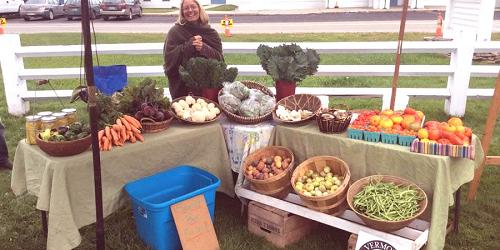
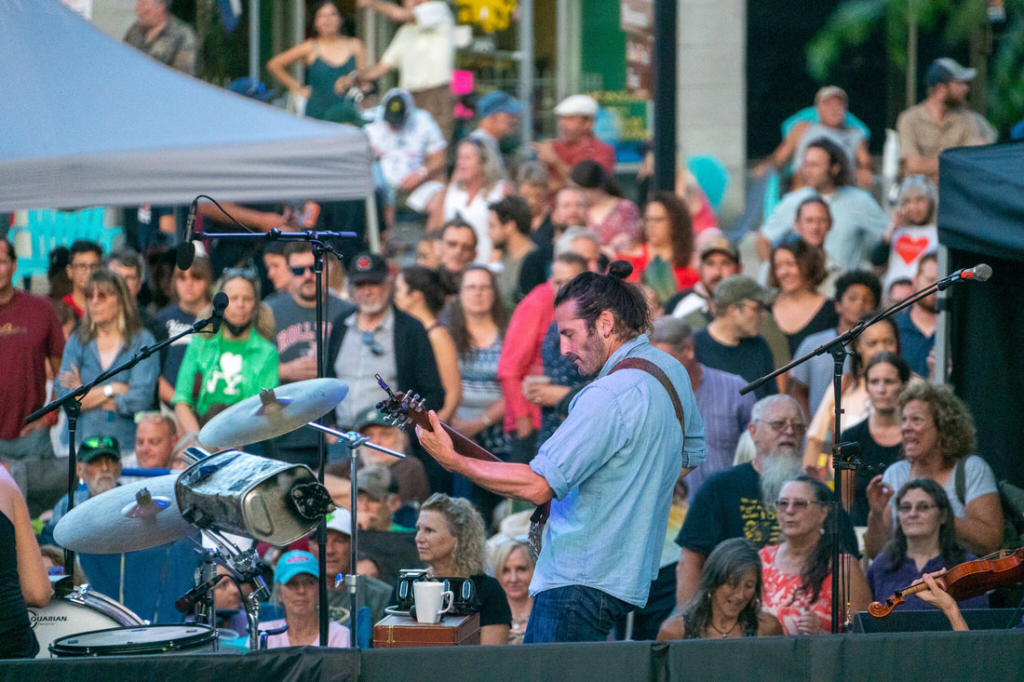
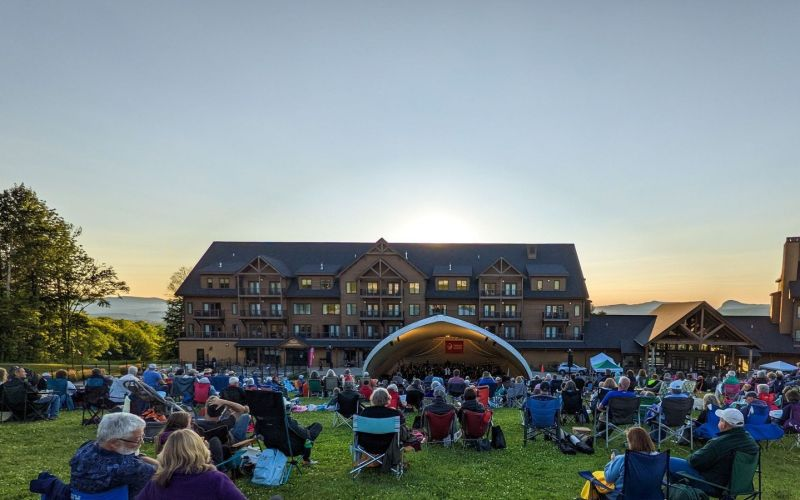
As winter starts to loosen its grip, the Northeast Kingdom begins to come alive again. Spring in and around St. Johnsbury isn’t just about better weather—it’s about getting back out, seeing familiar faces, and enjoying everything our community has to offer.
Here are a few things to keep on your radar as we head into the next few weeks:
🌱 Local Markets & Early Spring Pop-Ups
As the season shifts, local vendors start popping up again with early spring goods, baked items, and handmade products.
Keep an eye out for:
- Pop-up markets in downtown St. Johnsbury
- Early-season farm stands opening back up
- Local makers showcasing crafts and goods
It’s a great way to support local and shake off the winter cabin fever.
🎶 Live Music & Local Entertainment
As roads clear and nights get a little easier to get out, local spots start bringing music back.
Look for:
- Acoustic sets at local restaurants and pubs
- Small venue performances around the NEK
- Community gatherings with live entertainment
Nothing beats a low-key Vermont night with good music and good people.
🏔️ Burke Mountain Spring Activities
Up at Burke, the transition from winter to spring brings a mix of both worlds.
You can still catch:
- Late-season skiing and riding (weather permitting)
- Scenic drives and early hiking opportunities
- Events and gatherings as the mountain shifts seasons
It’s one of the best places to take in the change of seasons.
🚗 Scenic Drives Are Back
Not an “event” in the traditional sense—but around here, it might as well be.
Spring is when people start getting back out on the road:
- Drives through Lyndon, Danville, and Peacham
- Routes along the Connecticut River
- Exploring backroads you avoided all winter
It’s a reminder of why we live here.
☀️ Community Season is Here Again
This time of year always feels like a reset.
People are out more.
Events start filling the calendar.
And the Northeast Kingdom gets back to what it does best—community.
Stop In While You’re Out and About
If you’re out enjoying everything the area has to offer, swing by and see us at St. Johnsbury Chrysler Dodge Jeep Ram on Memorial Drive—just past the railroad tracks.
Whether you’re getting your vehicle ready for the season or just stopping in to say hello, we’re always here.
Mud season in Vermont gets a bad reputation — messy roads, dirty trucks, and that constant feeling like winter just won’t let go.
But if you’ve lived here long enough, you know something outsiders don’t…
Mud season might actually be one of the most “Vermont” times of the year.
It Means Winter Didn’t Win
Mud season is the transition. It’s proof we made it through another long winter in the Northeast Kingdom.
The snowbanks shrink. The sun starts sticking around a little longer. And for the first time in months, you don’t need to warm your truck up for 15 minutes before heading out.
The Roads Tell a Story
If you drive anywhere outside of town — especially the back roads around St. Johnsbury, Danville, or Burke — you’ll see it firsthand.
Ruts, soft shoulders, and the occasional “you probably shouldn’t go this way” stretch.
That’s not a problem here — that’s just part of life.
And honestly, it’s where vehicles like Jeeps and trucks really earn their keep.
It’s Maple Season
This is the real hidden gem of mud season.
Steam rolling out of sugarhouses. The smell of boiling sap in the air. Local producers working around the clock.
It’s one of the most authentic Vermont experiences there is — and it only happens right now.
You Start Seeing People Again
After a long winter, people start getting out more.
You see it at:
- Local gas stations
- Coffee shops
- Hardware stores
- Even just driving down the road
Mud season has a way of bringing the community back out.
It’s a Different Kind of Driving Season
This time of year reminds you why vehicle choice matters in Vermont.
It’s not about speed or flash — it’s about capability, reliability, and confidence when the road isn’t perfect.
And let’s be honest… roads aren’t always perfect around here.
Final Thought
Mud season isn’t pretty — but it’s real.
It’s a reminder of where we live, what we deal with, and why Vermonters take pride in getting through it year after year.
And if your vehicle can handle mud season in the Northeast Kingdom…
It can handle just about anything.
Connect with us


